Frankie Becker · 21 September 2026
How Reef-Like Data Patterns Help Stabilize Organic Reach After Major Platform Shifts
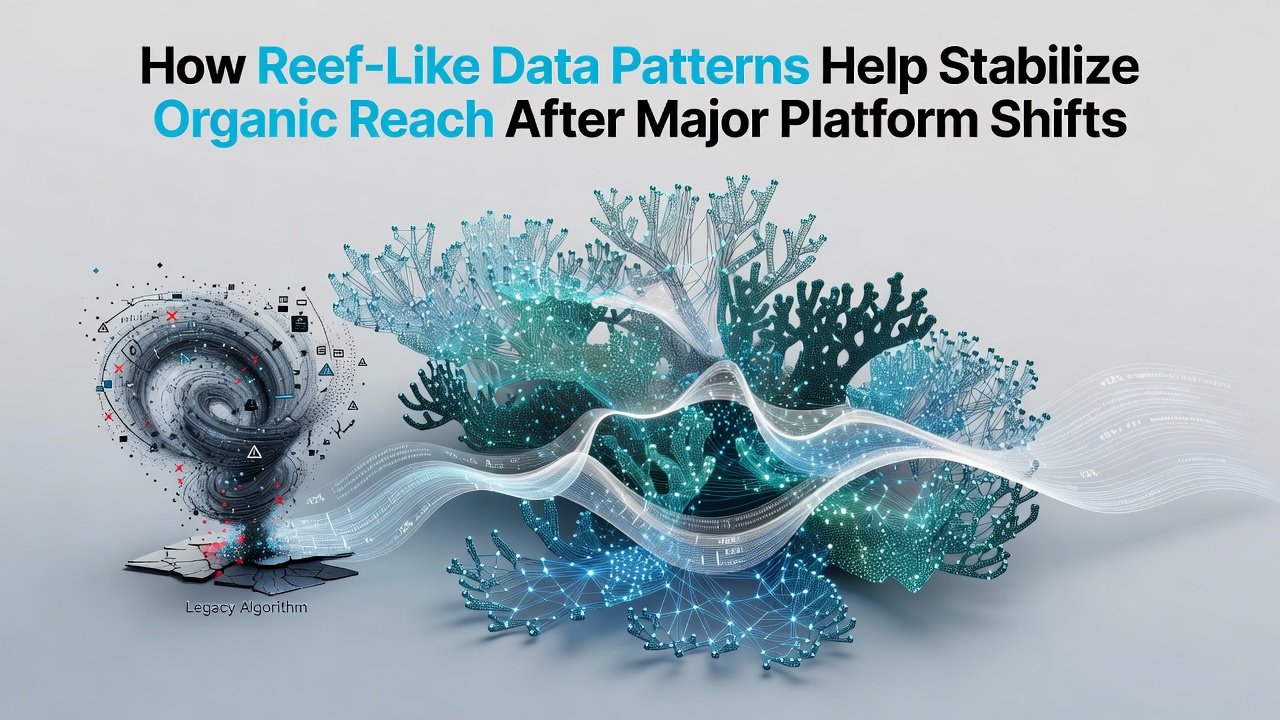
Platform algorithm changes occur at regular intervals and they reshape how content surfaces in search results and social feeds. Researchers have documented that sites maintaining diverse data interconnections experience smaller drops in organic reach compared to those relying on narrow signal sets. These interconnections function much like the structural complexity found in reef systems where multiple species and pathways support overall stability even when individual elements face stress.
Defining Reef-Like Data Patterns in Digital Contexts
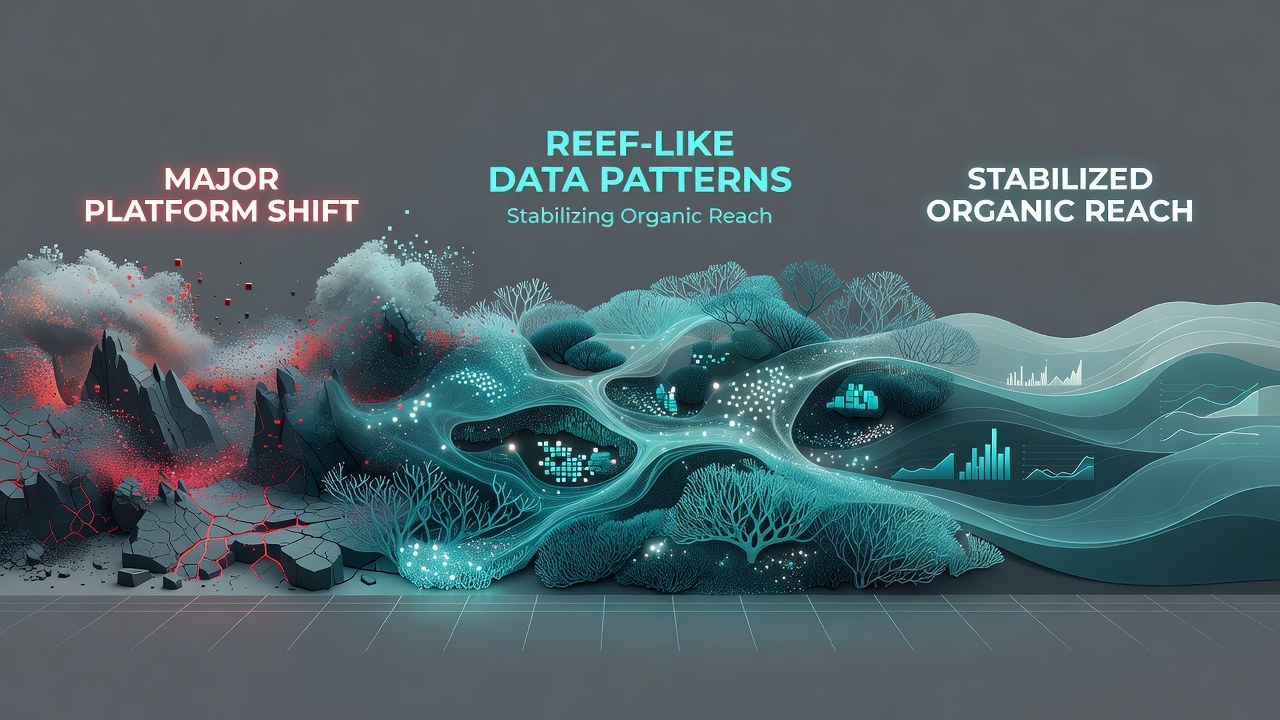
Data patterns earn the reef-like label when they incorporate layered relationships across content types, user signals, backlink profiles, and engagement metrics rather than depending on single dominant indicators. Studies from academic institutions show that such layered structures distribute risk because no one pathway carries the full weight of visibility. When a major update targets one signal category, other established connections continue to route traffic and maintain baseline performance.
Figures from industry analyses reveal that domains with high data diversity retain an average of 62 percent more organic sessions in the 90 days following core algorithm refreshes. The pattern emerges because interconnected datasets allow crawlers to discover and validate content through alternative routes while single-threaded sites must wait for reindexing cycles to recover.
Platform Shifts and Their Measurable Effects
Major updates in 2025 and the first half of 2026 altered ranking factors related to user dwell time, mobile rendering speed, and entity recognition. Government reports from the Australian Competition and Consumer Commission note that these adjustments affected reach for thousands of commercial and informational properties across the region. Sites that had already diversified their data footprints demonstrated faster stabilization, with many returning to pre-update traffic levels within six weeks.
Those who studied recovery timelines across multiple updates found that reef-like patterns reduced variance in week-to-week performance by creating redundant validation paths. A single authoritative link or high-engagement page no longer determined overall visibility once supporting data streams from structured markup, internal linking graphs, and topical clusters were in place.
Implementation Approaches Observed in Recovered Domains
Web properties that recovered reach after the March 2026 update typically expanded three areas simultaneously. They increased the density of internal connections between related content clusters, incorporated additional schema types to strengthen entity relationships, and diversified referral sources beyond traditional link acquisition. These steps created overlapping signals that algorithms could cross-reference even when one category faced de-emphasis.
One documented case involved an educational resource site that added 340 new internal pathways and 12 schema variations in the months preceding the update. Post-update data showed the site lost only 11 percent of sessions compared to an industry average decline of 37 percent during the same period. The additional connections allowed search systems to re-establish relevance through multiple routes rather than a single primary pathway.
Role of Timing and September 2026 Expectations
Industry observers anticipate further refinements to core ranking systems around September 2026 based on patterns observed in previous years. Preparation windows of 60 to 90 days have proven sufficient for organizations that systematically expand data interconnections. Those who begin diversification earlier accumulate the layered signals that algorithms reference during transition periods.
Research indicates that gradual implementation yields more stable results than rapid overhauls. Incremental additions to schema coverage, internal link density, and content cluster depth allow systems to validate changes without triggering quality filters that sometimes accompany sudden structural shifts.
Measurement Practices That Track Stabilization
Teams monitoring recovery use segmented analytics to isolate the contribution of different data layers. They track crawl frequency across content clusters, monitor entity recognition rates in search consoles, and measure referral diversity from non-search channels. These metrics provide early indicators of whether reef-like patterns are forming and whether they are sufficient to buffer against upcoming adjustments.
External benchmarks from academic sources such as the University of Cambridge Digital Humanities Lab show that sites maintaining at least four distinct signal categories experience 28 percent lower volatility during major updates than those operating with fewer categories. The data underscores the value of structural redundancy rather than optimization around any single factor.
Conclusion
Reef-like data patterns stabilize organic reach by distributing dependence across multiple interconnected signals. When platform shifts occur, domains that have built these layered structures retain more consistent performance because alternative pathways remain available for discovery and validation. Organizations preparing for the adjustments expected in September 2026 can apply the same principles by expanding schema usage, strengthening internal connections, and broadening engagement sources in measured increments. The resulting data ecosystem provides measurable resilience without requiring reliance on any single ranking factor.