David Carter · 7 September 2026
Drawing Parallels Between Coral Bleaching Events and Website Performance Declines in Algorithm Updates
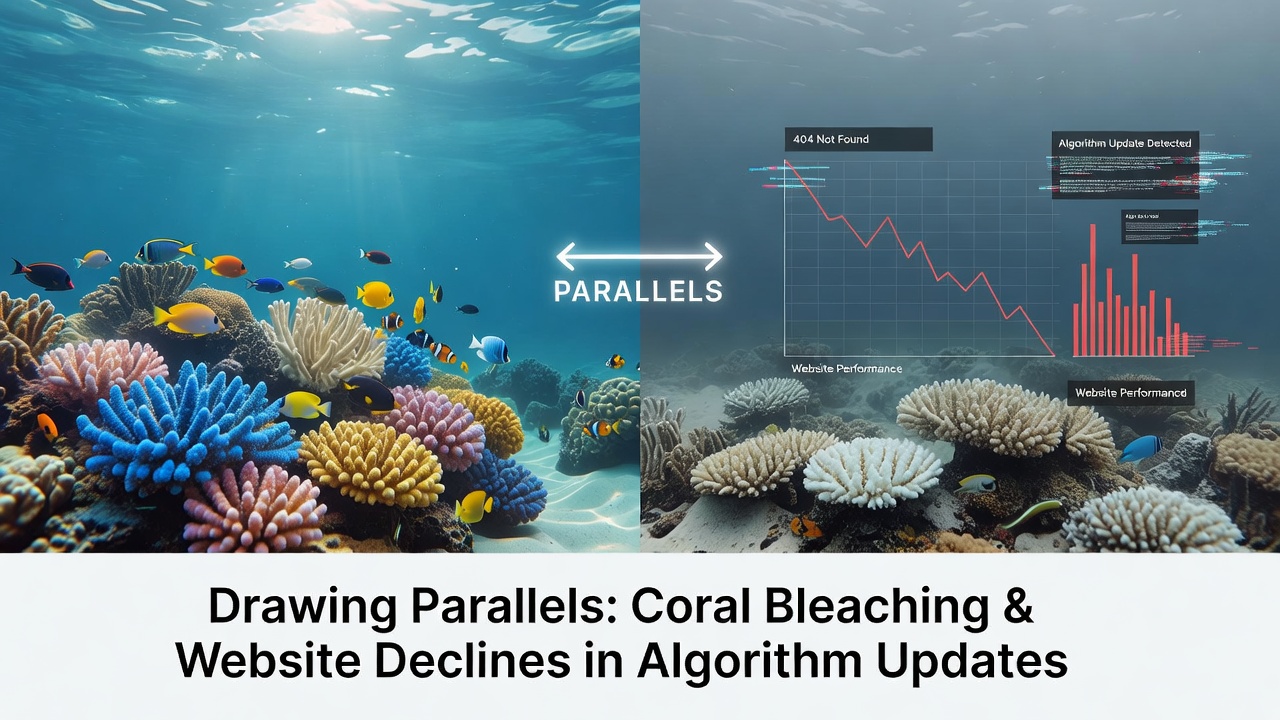
Coral bleaching occurs when corals expel symbiotic algae known as zooxanthellae under environmental stress, and researchers have documented these events across tropical reefs since the early 1980s with increasing frequency tied to elevated sea surface temperatures. Website performance declines follow similar patterns when search engine algorithms shift ranking criteria, causing sites to lose visibility and organic traffic without corresponding technical or content adjustments. Data from monitoring programs show that both systems respond to external pressures by shedding essential components that previously supported stability and growth.
Mechanisms of Coral Bleaching
Thermal stress triggers the breakdown in coral-algae relationships, and reports from the National Oceanic and Atmospheric Administration indicate that prolonged exposure above 1 degree Celsius above normal summer maxima initiates the process across multiple species. Corals then turn white as they lose pigmentation and energy sources, while recovery depends on rapid return to suitable temperatures and water quality conditions. Observers note that repeated bleaching episodes compound tissue damage, and long-term studies reveal reduced calcification rates that hinder reef structure maintenance over decades.
Algorithm Updates and Site Visibility
Search engines deploy core updates that refine evaluation signals for relevance, quality, and user experience, and historical records show major shifts occurring several times annually with measurable impacts on indexed pages. Sites that fail to align with new parameters experience drops in rankings, which in turn reduce referral traffic and engagement metrics tracked through analytics platforms. Technical audits often identify issues such as slow load times, thin content, or poor mobile optimization as contributing factors that become more pronounced after these changes take effect.
Shared Patterns in Stress Responses
Both coral systems and website infrastructures demonstrate threshold-based reactions where incremental pressures accumulate until a tipping point produces rapid deterioration, and comparative analyses highlight how early warning indicators precede full-scale events in each domain. Temperature anomalies serve as precursors in marine environments while fluctuations in crawl frequency and indexation signals often precede visibility losses in digital ones. Recovery trajectories require targeted interventions that restore symbiotic or algorithmic compatibility, although full restoration remains uncertain when stressors persist beyond critical windows.
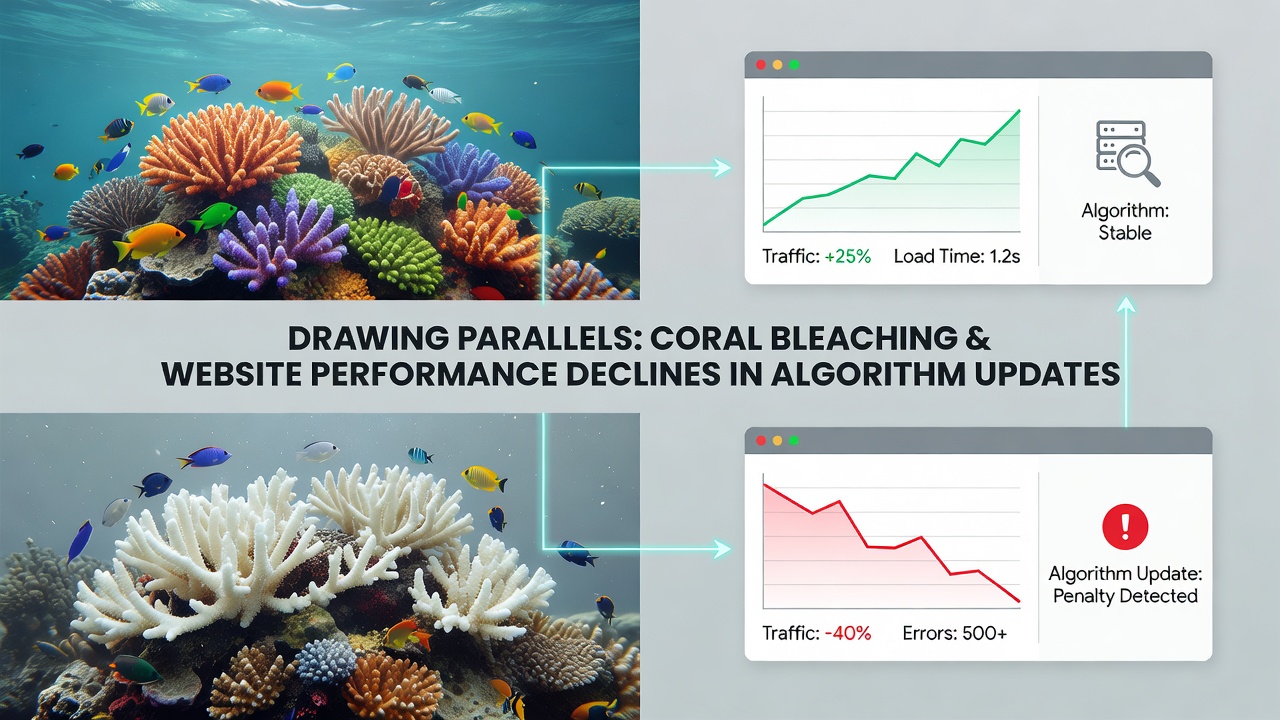
Monitoring networks collect continuous data on reef health metrics, and similar tracking tools measure search performance through impressions, click-through rates, and position averages reported in webmaster consoles. Evidence from reef surveys shows that bleached corals retain structural integrity for limited periods before erosion accelerates, whereas demoted websites maintain domain authority until further updates compound the initial setback. Researchers have observed that proactive measures such as shading experiments in oceans or structured data implementation on sites can mitigate damage when applied before thresholds are crossed.
Documented Events and Timelines
Mass bleaching episodes occurred in 1998, 2010, and 2014-2017 across the Great Barrier Reef and other regions, with satellite observations confirming widespread thermal stress during those periods according to records maintained by the Australian Institute of Marine Science. Algorithm updates from major engines produced comparable traffic shifts in 2011, 2018, and 2023, where sites relying on outdated optimization approaches saw sustained reductions in performance data. Projections through September 2026 suggest continued thermal anomalies in marine zones alongside anticipated refinements to ranking systems that emphasize experience and authority signals.
Recovery programs in affected reef areas focus on coral propagation and transplantation techniques that accelerate recolonization once conditions stabilize, while website remediation involves content audits, speed optimizations, and backlink profile reviews that realign sites with current evaluation frameworks. Data collected during these interventions demonstrate measurable improvements in both coral cover percentages and organic session counts when actions occur promptly after stress identification.
Conclusion
Coral bleaching and website performance declines share structural similarities in how external changes disrupt established equilibria, and ongoing research continues to refine detection methods that allow earlier responses in both contexts. Monitoring data from government agencies and academic institutions provide the factual basis for understanding these dynamics across geographic regions, while intervention strategies evolve alongside accumulating evidence from successive events.